
Rhinos, tigers and the Taj: a photographer’s journey across India
From the floodplains of Assam to the tiger heartland of Madhya Pradesh — and one iconic marble monument along the way — India delivered on every front.
Delhi: the gateway roars
Every trip to India seems to begin the same way — stepping out of the airport into a wall of heat, noise and colour that makes every other city feel a little quiet by comparison. Delhi is a place that demands you pay attention, and we were happy to oblige before our early flight east to Guwahati.
Kaziranga: the rhino stronghold
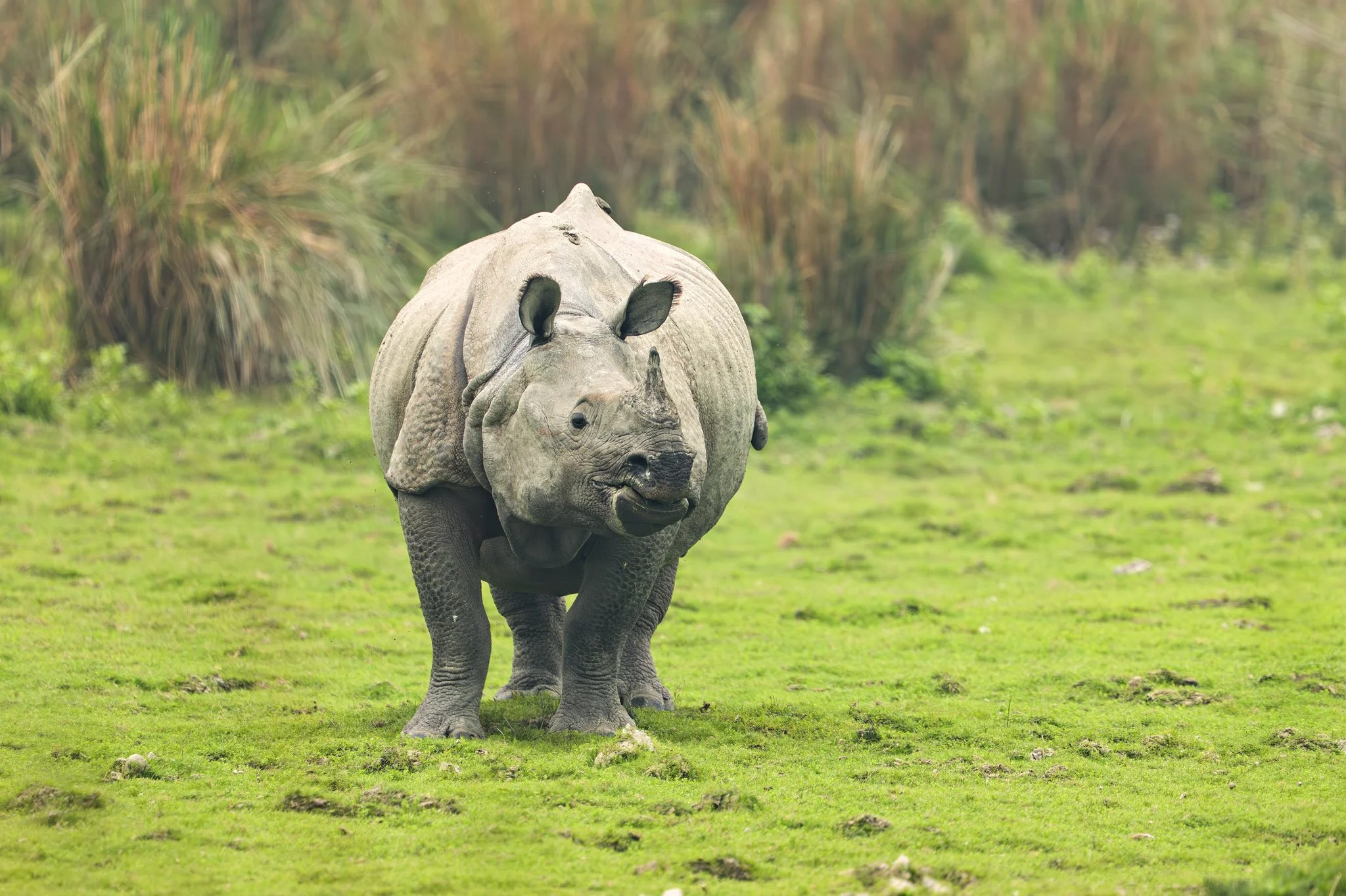
One horned Rhino of Kaziranga
Flying into Guwahati and driving east into Assam, the landscape shifts dramatically. The road to Kaziranga National Park cuts through tea gardens and small villages, with the Brahmaputra River a glittering presence to the north. By the time you reach the park boundary, the floodplain grasslands have opened up and you're already scanning the tree line.
Kaziranga is a UNESCO World Heritage Site and home to the world's largest population of Indian one-horned rhinoceros, and it didn't disappoint. We encountered rhinos at remarkably close range — these prehistoric-looking animals going about their day with magnificent indifference. Asian elephants moved in small family groups through the tall elephant grass, and wild water buffalo grazed in the open marshes alongside vast numbers of waterbirds: storks, pelicans, eagles and species I was still identifying days later.
The park's diversity is extraordinary. What Kaziranga lacks in the drama of a predator encounter it more than makes up for in sheer density of wildlife — there is something around every corner, and the light on the floodplains in the early morning is simply extraordinary for photography. (there was a golden tiger that one of our group saw, but I didn’t see it)
Agra: a detour for the ages
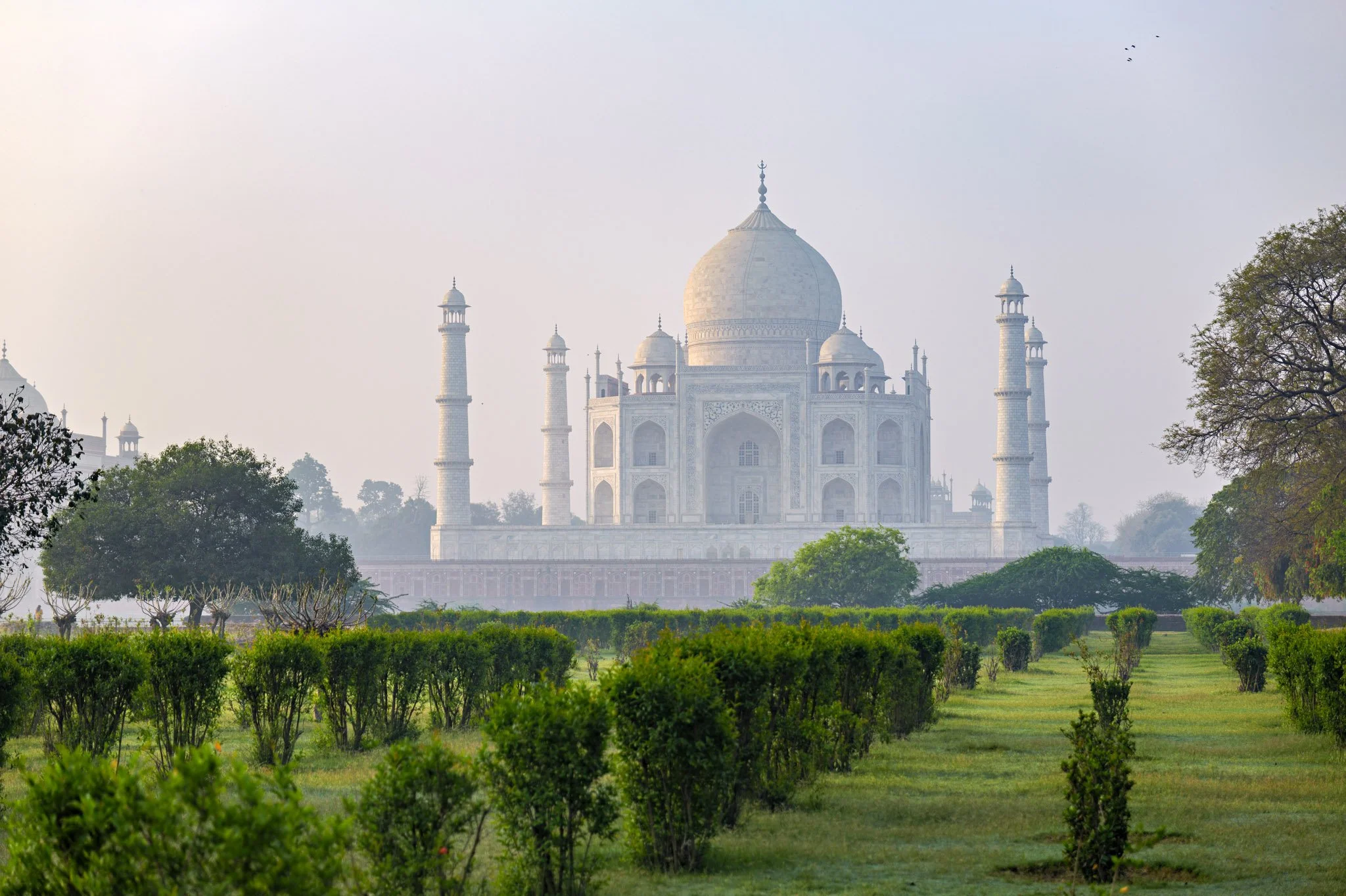
The Taj Mahal from across the river (not accessible on Fridays)
Back to Delhi, then south by road to Agra. I'll admit that the Taj Mahal is one of those places where you wonder beforehand whether it can possibly live up to its reputation. It does. The scale, the symmetry, the quality of the stonework — it's genuinely humbling, and completely unlike anything else I've ever seen. Even in a crowd, it manages to feel serene. A very different kind of wonder from Kaziranga, but no less memorable.
Tadoba and Pench: into tiger country
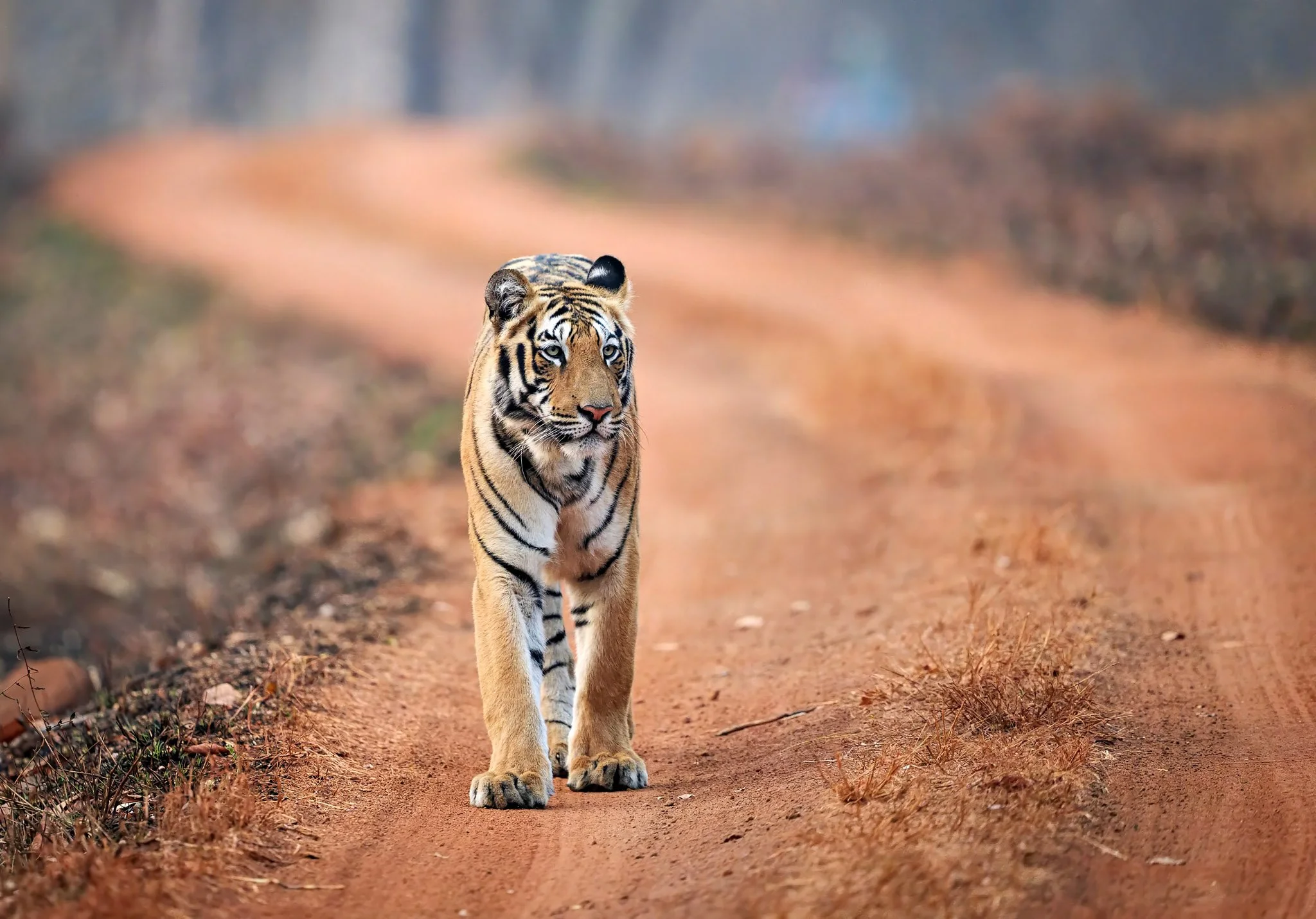
Young female tiger re-marking her territory
The second leg of the trip took us south from Delhi to Nagpur, the gateway to the Central Indian tiger reserves. We had safaris booked at both Tadoba-Andhari Tiger Reserve and Pench National Park, and this is where the trip shifted into another gear entirely.
Tadoba is raw and dense — dry teak forest broken by lakes and meadows, where the tension of a tiger reserve is palpable from the moment you enter. We were not kept waiting long. Tigers are the star, but the supporting cast is remarkable: Indian wild dogs (dholes) trotting purposefully through the undergrowth, jackals alert at the forest edge, and grey langur monkeys providing a natural early-warning system from the canopy above. We also had wonderful encounters with gaur — the massive Indian bison — as well as spotted deer, sambar, and an impressive variety of raptors and other birds.
Pench, which straddles Madhya Pradesh and Maharashtra, has a slightly more open character — forests of mixed teak and bamboo with wider sightlines and a rich birdlife that kept a lens busy between the bigger encounters. The resident tiger population here is well-habituated to vehicles, and our guides' knowledge of individual territories made the difference on more than one occasion.
On the gear
I had two Panasonic S1RII bodies one paired with the Sigma 300–600mm f/4 and the other with the Panasonic 70-200 mm f/2.8 throughout the trip — a combination that proved outstanding. The reach and fast aperture were invaluable in the low-contrast morning light of Kaziranga's grasslands and in the dappled shade of the Central Indian forests. Autofocus tracking on moving subjects was consistently reliable, and the image quality held up well when cropping into distance shots of rhinos or birds in flight.
Final thoughts
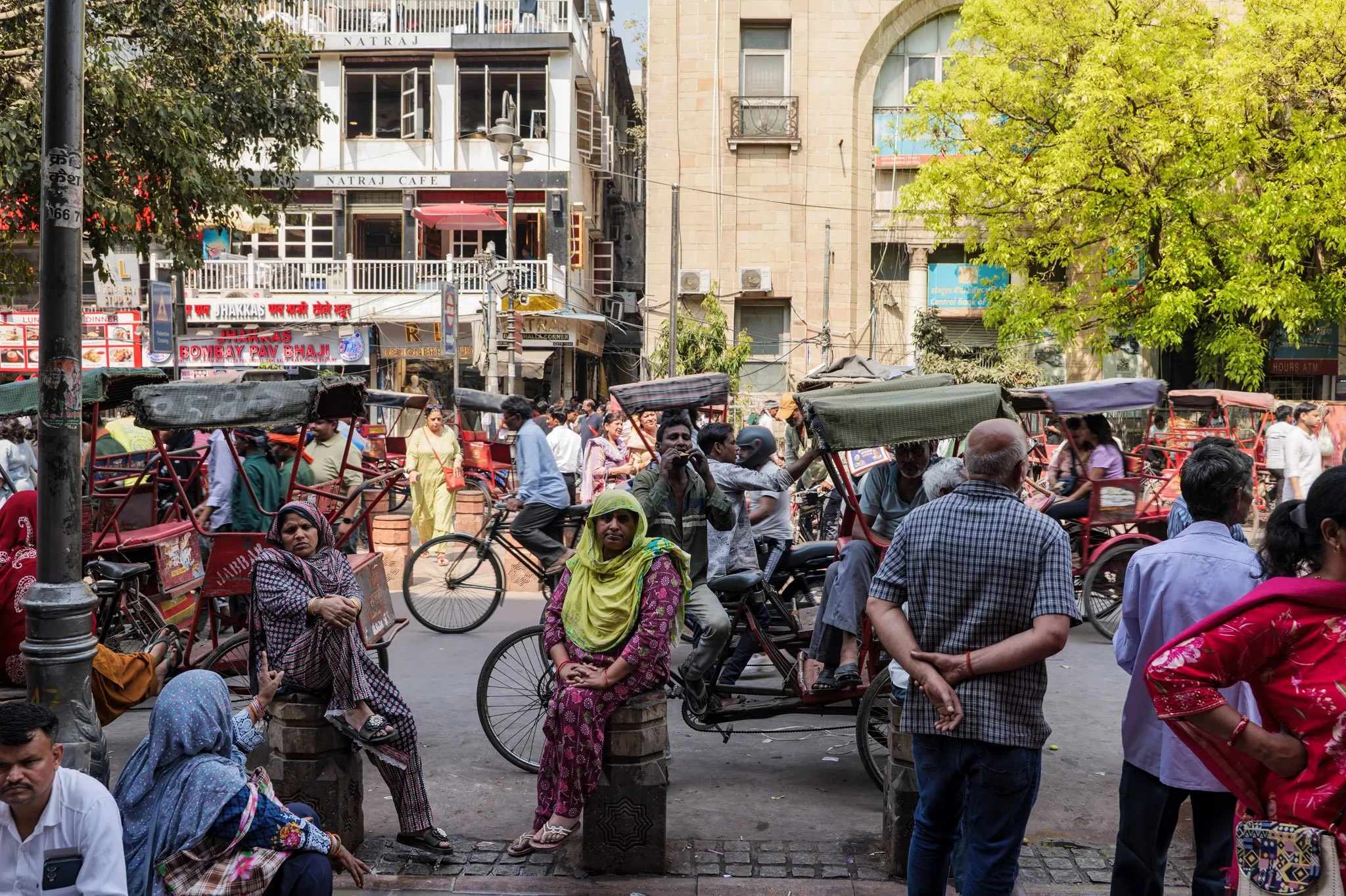
The street in Old Delhi
India is an overwhelming country in the best possible sense. In the space of a single trip it offered us world-class wildlife experiences across two completely different ecosystems, one of humanity's greatest architectural achievements, and the kind of daily sensory overload that still surfaces in your memory weeks later. Whether you come for the megafauna, the history, the food or simply the experience of being somewhere utterly unlike home — India delivers.
